It is likely that you have heard of a Demat account if you have ever considered investing in the stock market. It sounds technical and a little scary to many begginners. But it is far simpler to understand than most people realize.
Over the past ten years, there has been an important change in the Indian investment scene. India has more than 200 million Demat accounts, according to industry statistics, indicating a rise in interest in equities, mutual funds, exchange-traded funds (ETFs), and other assets. Having a Demat account is no longer exclusive to seasoned investors as digital investing becomes more common.
This leads us to a question that new investors frequently ask: What is a Demat account used for?
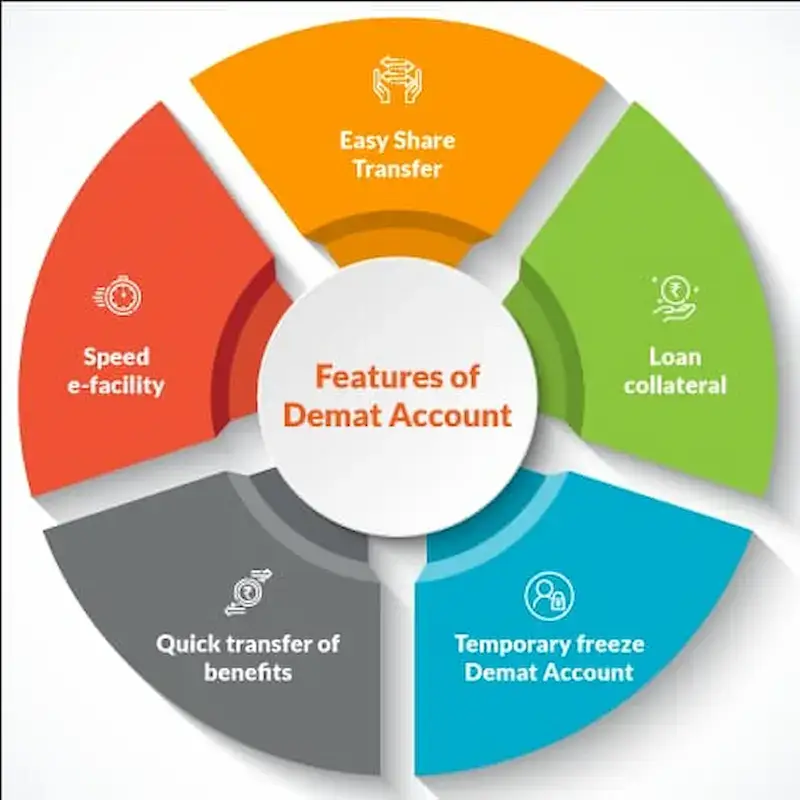
To put it simply, a Demat account functions as your investments’ digital locker. A Demat account holds your financial securities electronically, much like a bank account does. It speeds up and simplifies investing, removes bureaucracy, and increases security. Knowing how a Demat account operates will help you make wise financial decisions, regardless of whether you intend to purchase your first share or develop a long-term investment portfolio.
READ MORE: https://marketmantra2026.in/how-to-invest-in-sp-500-index-fund/
https://x.com/ETMarkets/status/2077617975402606653?s=20
Understanding a Demat Account
A Demat account, which stands for “Dematerialized Account,” is a type of account used to store electronic securities. Investors received tangible share certificates prior to the widespread use of Demat accounts. It took a lot of effort to manage these documents, and there was always a chance that they would be lost, stolen, or damaged. Investments are now digitally stored, facilitating smooth transfers.
Your Demat account is immediately credited each time you purchase shares using a trading platform. The securities are also taken out of your account when you sell them. Millions of Indians may now invest thanks to this digital revolution.
What is a Demat account utilized for? is a common question from beginners. There is more to the solution than just buying and selling stocks.
Primary Uses of a Demat Account
A Demat account fulfills various crucial functions:
- possessing shares of stock.
- storing ETFs and mutual funds.
- handling securities issued by the government.
- retaining debentures and bonds.
- taking part in initial public offerings.
- monitoring the performance of investments.
- enabling safe transactions.
Consider it the focal point of your investments. Everything is accessible in one location rather than having to manage numerous paper documents.
Holding Shares Electronically
Electronically storing shares is one of the main functions of a Demat account. Your account is immediately credited with each share you buy.
- This offers a number of advantages:
- There is no chance of losing certificates.
- Holdings are easily accessible.
- quicker transfers.
- improved documentation.
- increased safety.
Holding shares digitally is frequently the first and most crucial response when someone asks, “What is a Demat account used for?”
If you buy shares of a publicly traded corporation, for instance, they show up in your Demat account a few days after settlement. You can use the website or app of your broker to view your portfolio at any time.
Investing Beyond Stocks
Many people assume Demat accounts are only for stock market investing. In reality, they support a a variety of financial products.
Among them are:
- ETFs, or exchange-traded funds
- SGBs, or Sovereign Gold Bonds
- Bonds for corporations
- Securities issued by the government
- Mutual funds
- Investment Trusts for Real Estate (REITs)
- Investment Trusts for Infrastructure (InvITs)
Demat accounts are quite useful for investors looking for diversification because of their adaptability.
In reality, knowing what a Demat account is used for is important if you are creating a balanced portfolio. Because it enables you to manage several asset types from a single account, it becomes much more significant.
Applying for Initial Public Offerings (IPOs)
In recent years, IPO investing has become incredibly popular. Every month, thousands of individual investors make proposals for newly listed enterprises.
To participate in IPOs in India, you must have a Demat account. Shares are promptly credited to your account after they are assigned.
It is impossible to participate in the IPO market without a Demat account.
This is yet another explanation for the query, “What is a Demat account used for?” is crucial for prospective investors.
Digital platforms have made IPO applications more simpler. Investors can now use online banking and brokerage apps to apply in a matter of minutes.
Easy Portfolio Management
Having everything in one location makes managing investments easier.
With a contemporary Demat account, investors can:
- Keep an eye on profits and losses.
- Keep track of dividends.
- Examine past transactions.
- Examine the allocation of your investments.
- Account statements can be downloaded.
- Get updates on your investments.
Financial planning is enhanced when you have a comprehensive picture of your investments.
Experienced investors frequently stress that maintaining organization is just as important to successful investing as selecting quality assets. A Demat account is crucial to accomplishing that goal.
Receiving Corporate Benefits
Typically, companies reward shareholders by:
- Dividends
- Bonus shares
- Splits in stock
- Rights-related matters
Your Demat account is used to immediately process these advantages.
For example, when a business offers bonus shares, qualified investors get them straight into their accounts without requiring any further paperwork.
Receiving corporate incentives is sometimes disregarded when considering the uses of a Demat account, despite being one of its most advantageous characteristics.
For investors, the automation reduces administrative requirements and saves time.
Enhanced Security and Convenience
One of the best justifications for creating a Demat account is still security.
Physical certificates posed a number of difficulties:
- Theft.
- misplacement.
- Forgeries.
- harm.
- transfers that are delayed.
The majority of these hazards are eliminated by Demat accounts thanks to safe electronic systems that are governed by reputable organizations.
Depositories in India have advanced systems in place to protect investor holdings. Furthermore, additional security is offered by technologies like two-factor authentication.
A common question among novice investors is, “What is a Demat account used for?” Without a doubt, one of the main reasons millions of people have embraced digital investment is security.
Supporting Long-Term Wealth Creation
Investing is frequently compared to a marathon as opposed to a sprint. Disciplined investing has the potential to greatly increase wealth over time.
Long-term investors benefit from a Demat account since it makes it simpler to:
- Continue to invest.
- Monitor performance.
- Reinvest dividends.
- Spread out your holdings.
- Track your financial objectives.
Assume that over a period of 15 to 20 years, an investor makes consistent contributions to equities and ETFs. A unified account promotes uniformity and streamlines the entire process.
For this reason, opening a Demat account early in one’s investment path is often advised by financial gurus.
Who Should Open a Demat Account?
A Demat account has the following advantages:
- college students have an interest in investment.
- professions with salaries.
- entrepreneurs.
- retirees.
- long-term investors.
- traders who are active.
Being an expert in finance is not a must for opening one. These days, the majority of platforms provide simple onboarding procedures with digital verification.
You might still be wondering, “What is a Demat account used for?” at this point. In short, anyone who want to effectively and securely engage in India’s expanding financial markets uses it.ely.
Common Misconceptions
Demat accounts are still associated with a number of myths:
Myth 1: They Are Only for Traders
Reality: Long-term investors use Demat accounts just as frequently.
Myth 2: Opening One Is Complicated
The majority of accounts may now be started online in a matter of minutes.
Myth 3: They Are Expensive
In reality, many brokers provide low or even free account opening fees.
Myth 4: They Are Only for Stocks
Reality: A variety of financial products are supported by demat accounts.
Beginners can approach investing with more confidence if they are aware of these errors.
Choosing the Right Demat Account
Prior to creating an account, think about:
- yearly maintenance fees.
- fees for brokerage.
- quality of customer service.
- experience with mobile applications.
- tools for research.
- characteristics for security.
- the broker’s reputation.
Your entire investment experience might be enhanced by selecting the appropriate supplier.
Recall that the best account is the one that fits your investing style and financial objectives rather than just being the cheapest.
Final Thoughts
The investment ecosystem in India is still developing at a remarkable rate. Investing is now more accessible than ever thanks to digital platforms, and Demat accounts are at the core of this change.
The response to the question, “What is a Demat account used for?” ought to be lot more obvious. Electronic investment storage, safe transactions, IPO participation, corporate perks, portfolio management, and long-term wealth growth are all made possible by it.
In the end, what is the purpose of a Demat account? It serves as a doorway to contemporary investing. A Demat account gives you the foundation you need to start your journey with confidence, regardless of whether you intend to invest a small sum each month or gradually create a sizable portfolio.
FAQs
Can I open more than one Demat account?
Yes, investors can have numerous Demat accounts with various brokers.
Is a PAN card required to start a Demat account?
Yes, PAN cards are often necessary under current legislation.
Can I invest in mutual funds using a Demat account?
Yes, most mutual funds can be held electronically.
Is a Demat account safe?
Yes, Demat accounts are regarded as highly secure due to electronic storage and regulatory oversight.
Do I need a Demat account to make IPO investments?
Yes, a Demat account is required to get assigned IPO shares.