
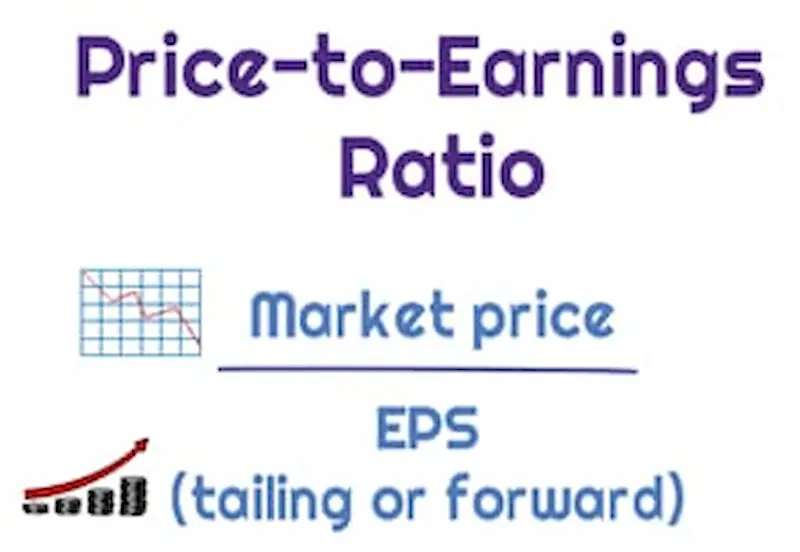
When people start begin investing in the share market, one of the first financial terms they come across is the P/E ratio, or means Price-to-Earnings ratio. It is one of the most used criteria when deciding whether a stock appears expensive or inexpensive compared to its earnings.
But, many beginners misunderstand what the P/E ratio actually tells them. While some think a high P/E should always be avoided, others think a low P/E automatically indicates a stock is cheap, In reality, neither assumption is accurate.
If you’ve ever wondered What is a good PE ratio?, The industry in which the business operates, its growth rate, the state of the economy, and its potential for future profits all strongly affect the response.
Everything you need to know about the P/E ratio in 2026 is included in this easy-to-read guide, including its definition, formula, useful examples, benefits, drawbacks, and how expert investors use it to make wiser investment choices.
READ MORE: https://marketmantra2026.in/what-is-a-good-pe-ratio/
https://x.com/DrdhimanBhatta1/status/2074013073762025987?s=20
What Is the P/E Ratio?
The Price-to-Earnings (P/E) ratio defines the amount that investors are ready to spend for each dollar (or rupee) of a company’s yearly profits.
To put it simply, it stands out:
- The stock’s current market price
- Earnings per share (EPS) of the business
The ratio aids investors in comprehending how the market assesses the profitability of a business.
P/E Ratio Formula
Current share price divided by earnings per share (EPS) is the P/E ratio.
For example:
- Share Price = $120
- Earnings Per Share = $6
P/E Ratio = 120 ÷ 6 = 20
This means investors are paying $20 for every $1 of annual earnings generated by the company.
Why Is the P/E Ratio Important?
The P/E ratio is a quick way to assess whether the valuation of a stock looks reasonable.
It benefits investors:
- Compare companies in the same sector.
- Determine which stocks may be overpriced or undervalued.
- Assess the expectations of the market
- Encourage long-term investment choices
- Examine the company’s prospects for growth.
The P/E ratio is still one of the best places to start when looking at equities, but professional investors rarely ever utilize just one measure.
Understanding the Meaning Behind the Numbers
A P/E ratio does more than just show how costly or inexpensive a stock is.
Instead, it reflects the expectations of investors.
Low P/E Ratio
A lower P/E ratio could mean:
- The stock is cheap.
- Investors predict lower growth.
- The business works in a developed sector.
- There are short-term business difficulties.
A low P/E can occasionally be a great moment to invest. At other instances, it represents real business issues.
High P/E Ratio
A greater P/E ratio often suggests:
- Strong predicted increase in the future
- Strong investor trust
- High-end rating
- Innovative or rapidly expanding companies
Because investors anticipate significant future earnings growth, technology businesses often trade at higher P/E ratios.
What Is a Good PE Ratio?
“What is a good PE ratio?” is an often asked question by beginners. In reality, there isn’t a single figure that works for every company.
The average market P/E ratio has historically usually been between 15 and 25, but this changes based on interest rates and market conditions.
In general:
- Less than 15 could be a sign of a lower value.
- 15 to 25 is frequently regarded as moderate.
- Higher growth forecasts could be indicated by a number above 25.
However, the industry you’re researching has a major effect on what makes a good PE ratio. Because a software company’s chance of making future profits is so different from that of a traditional manufacturing company, it can be worth a much higher P/E.
Comparing P/E Ratios Across Industries
Comparing firms from entirely different industries is one of the most common mistakes made by investors.
For example:
| Industry | Typical P/E Range |
|---|---|
| Banking | 8–15 |
| Energy | 10–18 |
| Manufacturing | 12–20 |
| Consumer Goods | 18–30 |
| Technology | 25–50+ |
| Healthcare | 20–40 |
For this reason, asking “What is a good PE ratio?” without considering the industry of the company may get inaccurate results.
Compare companies with similar rivals at all times.
Trailing vs Forward P/E Ratio
P/E ratios come in two common varieties.
Trailing P/E
use profits from the previous 12 months.
Advantages:
- Regarding actual financial outcomes
- More trustworthy historical information
Disadvantages:
- does not account for future growth
Forward P/E
utilizes estimated earnings for the next year.
Advantages:
- reflects expectations for the future
- Liked by analysts
Disadvantages:
- depends on potentially incorrect estimates
When making financial decisions, most of seasoned investors take both into account.
Practical Example
Imagine two companies.
Company A
- Share Price: $100
- EPS: $5
- P/E Ratio: 20
Company B
- Share Price: $100
- EPS: $10
- P/E Ratio: 10
Company B looks more affordable at first.
Let’s say, however, that Company A’s earnings are predicted to increase by 35% a year, whereas Company B’s are only expected to increase by 4%.
All of a sudden, Company A’s higher P/E would make logic.
Because of this, investors often ask, “What is a good PE ratio?” Future growth—rather than just present earnings—is always the deciding factor.
Advantages of Using the P/E Ratio
The P/E ratio continues to be widely used since it is simple to understand.
Among the main benefits are:
- Quick appraisal tool
- Easy calculation
- Helpful for comparing competitors
- aids in locating expensive stocks
- encourages research on long-term investments
- Professional analysts frequently use
The P/E ratio is frequently one of the first figures that investors look at before looking at more complex financial measures due to its simplicity.
Limitations of the P/E Ratio
The P/E ratio has a number of important drawbacks regardless its usefulness.
It Doesn’t Work for Companies Losing Money
The P/E ratio cannot be computed in a meaningful way if earnings are negative.
Growth Isn’t Fully Reflected
Businesses that develop quickly are frequently worth more than those that grow more slowly.
Industry Differences Matter
When banks and tech companies are compared only based on the P/E ratio, false deductions are drawn.
Accounting Can Affect Earnings
In some cases, accounting changes may have a bearing on reported earnings, making the ratio less trustworthy.
Such limitations mean that a single figure should never be used to answer the question, “What is a good PE ratio?”
Factors That Influence the P/E Ratio
A company’s valuation can be impacted by a number of factors.
Among them are:
- Growth in revenue
- Margin of profit
- Rates of interest
- The rate of inflation
- Investor trust
- Expectations for the economy
- Trends in the industry
- Reputation of the company
- A benefit over competitors
The P/E ratio varies in parallel with these variables.
Should You Buy Stocks With Low P/E Ratios?
Not necessarily.
A low The P/E ratio could show:
- Undervalued chance
- Lower business
- Poor management
- Falling earnings
- Industry difficulties
Due to the underlying company’s ongoing decline, many investors purchase “cheap” stocks that stay inexpensive for years.
Before making an investment, always look into the reasons behind the low P/E ratio.
Should You Avoid High P/E Stocks?
Not always, once more.
Because their earnings continued to grow quickly, some of the most successful companies in history traded at high P/E ratios for many years.
Companies with strong innovation, growing markets, and steady profitability are usually valued higher than traditional companies.
Investors should consider whether future earnings support the current price rather than being afraid of high P/E equities.
Other Metrics to Use Alongside the P/E Ratio
One financial ratio is rarely used by professional investors.
Think about combining the P/E ratio with:
- PEG Ratio
- Ratio of Price to Book (P/B)
- ROE, or return on equity
- Ratio of Debt to Equity
- Growth Rate of Earnings
- Free Flow of Cash
- Margin of Profit
- Yield on Dividends
When combined, these indicators offer a far more comprehensive view of a business’s financial situation.
Common Mistakes Beginners Make
Many new investors misuse the P/E ratio.
Avoid these common mistakes:
- Comparing companies in various industries
- Ignoring possible increases in earnings
- Using a single financial indicator
- It is usually better to think lower.
- Ignoring the basis of the company
- Ignoring more general market conditions
Knowing these risk factors aids in responding to More precisely, what is a decent PE ratio in practical investing?
Frequently Asked Questions
What makes a PE ratio good?
The answer is not universal. The industry, growth rate, competitive position, and general state of the market all influence a fair P/E.
Is it always beneficial to have a lower P/E ratio?
No. A low P/E could be an indication of serious corporate issues or an undervalued opportunity.
Is it possible to explain a high P/E ratio?
Indeed. Because investors predict bigger future profits, companies with strong expected earnings growth often trade at higher P/E ratios.
Should beginners rely only on the P/E ratio?
No, it should be used in addition to other financial ratios and a detailed examination of the financial performance and business model of the company.
What Is P/E Ratio? Conclusion
Every investor should be familiar with the P/E ratio as it is one of the most simple and helpful instruments used to evaluate equities. It helps compare companies in the same industry and gives information about how much investors are ready to pay for a company’s earnings.
However, a stock’s suitability as an investment cannot be based on a single figure. Valuation is affected by a number of factors, including industry trends, financial health, growth potential, and general economic conditions.
If you’re still unclear about what makes a solid PE ratio, keep in mind that context is more important than a set figure. When deciding what constitutes a good PE ratio, one should always compare comparable companies, assess the potential for future profits, and take the company’s overall quality into account. You’ll be much better able to make wise investment choices and develop a more strong portfolio over time if you are aware of these factors.

Pingback: What Is MCX and How Does It Work? Beginner's Guide (2026)