Index funds might be an extremely simple place to start if you want to participate in the Indian stock market without attempting to find the next multibagger firm. An index fund often aims to duplicate a market index and provide returns that are comparable to that benchmark, after charges and tracking differences, rather than expecting a fund management to choose individual winners.
But picking one might be surprisingly challenging given the number of index funds that are now accessible. For biggenners investors seeking an affordable, diversified approach to equities investing, the question, “What are the top 5 index funds in India?” is therefore becoming more and more pertinent.
Before analyzing any list, it’s important to realize that “top” does not always refer to the fund with the highest recent return. A short-term performance rating may not be as important for an index fund as elements like expense ratio, tracking difference, fund size, liquidity, portfolio replication, consistency, and the quality of the underlying index.
This post highlights what investors should consider before selecting an index fund in 2026 and looks at five well-known alternatives.
Important: The funds below are examples for educational research, not personalized investment recommendations. Fund expenses, AUM, tracking performance and other figures can change, so verify the latest factsheet before investing.
READ MORE: https://marketmantra2026.in/technical-analysis-for-beginners/ https://x.com/sunilgurjar01/status/2097293890596622695?s=20
What Is an Index Fund?
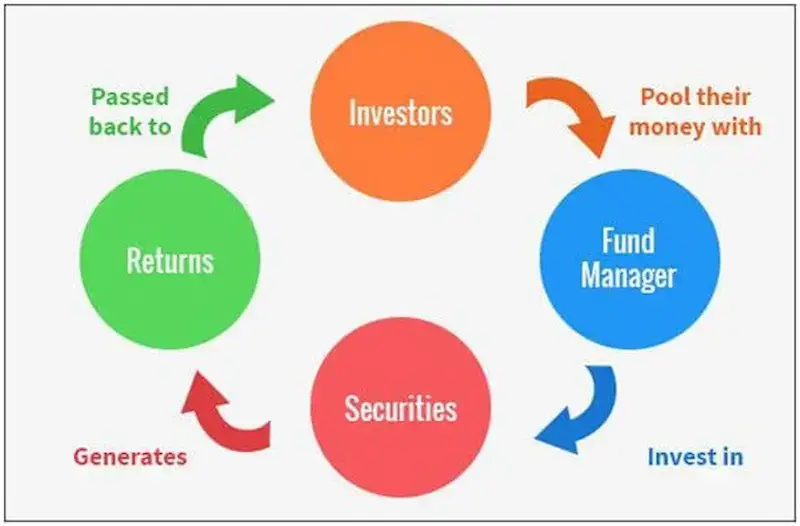
A mutual fund created to track a certain market index is called an index fund.
A Nifty 50 index fund, for instance, holds the stocks included in the index in roughly comparable quantities in an effort to approximate the performance of the Nifty 50 Total Return Index.
Beating the market on a regular basis is not the goal.
Rather, the goal is to obtain the market’s return at a comparatively cheap cost.
A large portion of the stock-picking decision-making involved in actively managed funds is eliminated by this passive technique.
A simple example
Suppose the Nifty 50 contains 50 major Indian companies.
Rather than researching hundreds of companies and trying to decide which ones will outperform, an investor can buy a Nifty 50 index fund and obtain exposure to the index through a single investment.
If the index rises, the fund’s NAV should generally rise as well, although the fund’s actual return will differ slightly because of expenses, tracking difference, cash holdings and other factors.
How We Selected the Top 5 Index Funds
It’s helpful to clarify what “top” means before posing the question, “What are the top 5 index funds in India?”
The choice for this article highlights:
established history of funds
Significant or large AUM
Minimal or appropriate costs
Monitoring effectiveness
Exposure to a wide market
Availability for regular investors
Long-term appropriateness
Ease of use for novices
The five funds that are most expected to produce the highest return in the upcoming year are not ranked on this list. Nobody can accurately predict that beforehand.
Rather, these five funds merit more investigation. because they represent established ways of obtaining broad Indian equity exposure.
Top 5 Index Funds in India for 2026
| Fund | Benchmark | Approx. AUM | Expense Ratio* | Best Suited For |
|---|---|---|---|---|
| UTI Nifty 50 Index Fund | Nifty 50 TRI | ₹29,485 Cr | 0.25% | Established Nifty 50 exposure |
| HDFC Nifty 50 Index Fund | Nifty 50 TRI | ₹23,784 Cr | 0.29% | Large-scale passive investing |
| ICICI Prudential Nifty 50 Index Fund | Nifty 50 TRI | ₹17,254 Cr | 0.24% | Low-cost Nifty 50 exposure |
| Nippon India Index Fund – Nifty 50 Plan | Nifty 50 TRI | ₹3,884 Cr | 0.06% | Cost-conscious investors |
| Tata Nifty 50 Index Fund | Nifty 50 TRI | ₹1,707 Cr | 0.19% | Established alternative |
*Figures are subject to change and are based on sources that were accessible in September 2026. When available, the stated direct-plan data is referred to in expense-ratio stats.
1. UTI Nifty 50 Index Fund
One of the most well-known options in India for investors looking for passive exposure to the Nifty 50 is the UTI Nifty 50 Index Fund.
The direct-growth version was one of the biggest funds in its category as of September 2026, with an AUM of about ₹29,485 crore. The Nifty 50 Total Return Index serves as its benchmark, and its stated total expense ratio was 0.25%.
Since its founding in January 2013, the fund has had extensive experience operating in a variety of market conditions.
Why investors consider it
A guarantee of high profits is not its main draw. Rather, it blends:
Long history of operation
large asset base
Exposure to the Nifty 50
A reputable fund house
Simple passive approach
According to the referenced source, the minimum investment is ₹500 for SIP and ₹5,000 for lump-sum investments.
It is a fund worth contrasting with its competitors for investors looking for a traditional Nifty 50 index approach.
2. HDFC Nifty 50 Index Fund
Another important option in the area is the HDFC Nifty 50 Index Fund.
As of August 31, 2026, the HDFC Mutual Fund’s official page claims an AUM of about ₹23,783.91 crore, using the Nifty 50 Total Return Index as its benchmark. The page also states that the fund has a minimum SIP of ₹100 and is classified as Very High risk.
As of August 31, 2026, a different current data source estimates a total expense ratio of around 0.29%.
Why it stands out
The fund offers:
Exposure to the broad Nifty 50
large asset base
Long history of functioning
Inexpensive passive structure
Minimal SIP amount
Investors should be aware that a high AUM by itself does not improve an index fund. How well the fund matches its benchmark after fees is the more crucial question.
3. ICICI Prudential Nifty 50 Index Fund
The ICICI Prudential Nifty 50 Index Fund is another well-known option.
According to current statistics, as of August 31, 2026, the direct-growth plan had an AUM of around ₹17,254 crore and a total cost ratio of about 0.24%. The fund was established in January 2013 and tracks the Nifty 50 Total Return Index.
What makes it interesting?
The combination of:
A lengthy history
High AUM
Exposure to the Nifty 50
Competitive prices
Minimal required investment
provides it an additional viable option for comparison.
It is crucial for novices to comprehend that the fund’s declared risk categorization is Very High. Even if an index fund is easy to manage, stock market volatility can nevertheless affect an equity index fund.
4. Nippon India Index Fund – Nifty 50 Plan
The Nippon India Index Fund – Nifty 50 Plan is worth considering for those who are very concerned about fund fees.
According to Value Research’s latest statistics, the direct plan has an AUM of about ₹3,884 crore and a base cost ratio of about 0.06%. The fund is benchmarked to the Nifty 50 TRI.
Since the fund’s launch in January 2013, investors have had a fair amount of time to evaluate it.
Why the expense ratio matters
Let’s say two funds follow nearly the same index.
The difference is deducted from investor returns if one continuously has higher operating costs.
This does not guaranty that the least expensive fund will yield the highest net return. Execution, tracking differences, and other aspects are also important. However, one of the few factors that investors can assess with a fair degree of accuracy is cost.
Because of this, the expense ratio is crucial to addressing “What are the top 5 index funds in India?”
5. Tata Nifty 50 Index Fund
Another well-known choice is the Tata Nifty 50 Index Fund.
According to current Value Research statistics, the direct plan has an AUM of about ₹1,707 crore and a basic expense ratio of 0.19%. The fund was introduced in January 2013 and follows the Nifty 50 TRI.
Additionally, a minimum SIP of ₹150 is listed in the referenced material.
Why consider it?
It offers:
a proven track record
Exposure to the Nifty 50
Investing passively
A fair percentage of expenses
Easy access to SIP investments
Although its AUM is lower than that of some of the larger funds in our comparison, an investment choice shouldn’t be made only based on AUM.
Why Nifty 50 Index Funds Are Popular
The ease of Nifty 50 exposure is one of the main reasons these products come up when someone searches for “What are the top 5 index funds in India?”
Major businesses from a variety of Indian economic sectors are represented by the Nifty 50.
An investor can obtain exposure to the index through a single mutual fund rather than buying individual shares.
Although it doesn’t completely remove market risk, this offers diversity across businesses and industries.
What Should You Check Before Buying an Index Fund?
It is insufficient to select a fund only because it is listed among the “top five.”
These are the most crucial elements to look at.
1. Expense Ratio
All other things being equal, a smaller expense ratio is usually advantageous.
Don’t stop here, though.
A fund may be able to track its index more effectively than a less expensive rival if it has a slightly higher cost ratio.
2. Tracking Difference
For investors in index funds, this is likely one of the most important indicators.
A theoretical return is generated by the index. The fund has operating variations and incurs costs.
The tracking difference is the difference between the performance of the fund and the index.
According to AMFI documentation, tracking error and tracking difference quantify the divergence between the fund and its underlying index. These discrepancies can be caused by a variety of variables, including transaction time, liquidity, settlement, and dividend reinvestment.
It is ideal for a passive fund to continuously reduce this disparity.
3. Fund Size
Although a higher AUM may suggest that the fund is used by a big number of investors, it does not ensure better performance.
For instance, the current AUMs of the funds mentioned above range from around ₹29,485 crore for UTI’s fund to approximately ₹1,707 crore for Tata’s fund.
Instead of using AUM as the determining factor, use it as one data point.
4. Fund Age
An oMore historical data is available through the Lder Fund.
You can look at its behavior during:
Bull markets
Corrections in the market
Slowdowns in the economy
High-volatility periods
Even yet, past performance does not ensure future profits.
Direct vs Regular Index Funds
The difference between Direct and Regular programs is also crucial.
A direct plan usually has a reduced expense ratio because it is bought without the intermediate commission structure that comes with ordinary plans.
The cost differential may eventually compound for long-term investors.
Comparing direct plans is frequently beneficial if you feel confident choosing and overseeing your investment on your own.
Growth vs IDCW Option
Growth and IDCW options may also be presented to investors.
Growth Option
Returns stay invested in the fund and continue to contribute to market expansion.
IDCW Option
When the AMC announces a dividend, the fund may give investors their income. IDCW and assurance of interest are not the same thing.
Before making an investment, investors who mainly deal with building long-term wealth must know how each choice works.
Are Index Funds Safe?
This is where beginners can occasionally become perplexed.
Although index funds are straightforward, they are not risk-free.
A Nifty 50 index fund makes stock investments. The fund’s NAV may decrease if the Nifty 50 declines dramatically.
According to the provided current statistics, the funds under discussion are categorized as Very High risk.
Diversification is the benefit, not defense against market downturns.
Are Index Funds Better Than Actively Managed Funds?
TherThere isn’t a universal winner.
By choosing securities, an active fund aims to beat its benchmark.
The only goal of an index fund is to mimic its benchmark.
Typically, index funds have:
Reduced complexity of management
Reduced expenses
Increased predictability of the portfolio
Reduced reliance on management stock selection
Active funds may perform better than their benchmarks, but they may also perform worse after expenses.
Passive investing might be a tempting alternative for investors who think it’s hard to constantly find successful fund managers.
How Much Should You Invest?
There isn’t a single, widely accepted amount.
Calculating your investment quantity based on the following is a good strategy:
Monthly earnings
Savings for emergencies
Current debt
Financial objectives
Horizon for investments
Tolerance for risk
Instead of attempting to forecast the ideal time to enter the market, a systematic investing strategy might provide long-term investors a disciplined approach to make regular investments.
Common Mistakes to Avoid
Investors frequently make the error of viewing the list as a rating of certain winners when they look for “What are the top 5 index funds in India?”
Avoid clear of these errors:
Chasing the Lowest NAV
A fund is not necessarily less expensive if its NAV is lower.
Choosing Only by Past Returns
Prior to fees and tracking differences, the long-term performance of two funds that follow the same index should be similar.
Ignoring Tracking Difference
The expense ratio by itself does not provide a whole picture.
Investing for Short-Term Goals
The short-term volatility of equity index funds can be quite high.
Buying Too Many Similar Funds
Having five Nifty 50 index funds does not guaranty significant diversification. In simple terms, they are all trying to offer exposure to the same underlying index.
What Are the Top 5 Index Funds in India for Beginners?
The five funds covered here offer a helpful shortlist for additional investigation for a beginner looking for simple Nifty 50 exposure:
The UTI Nifty 50 Index Fund
The HDFC Nifty 50 Index Fund
The ICICI Prudential Nifty 50 Index Fund
Nifty 50 Plan: Nippon India Index Fund
The Tata Nifty 50 Index Fund
Declaring one fund to be better than the others is not the goal. Instead, before making a choice, consider tracking differences, fund size, history, minimum commitment, fee ratios, and your own investing needs.
Frequently Asked Questions
What are the top 5 index funds in India?
UTI Nifty 50 Index Fund, HDFC Nifty 50 Index Fund, ICICI Prudential Nifty 50 Index Fund, Nippon India Index Fund – Nifty 50 Plan, and Tata Nifty 50 Index Fund are five well-known possibilities worth investigating in 2026. Costs, tracking performance, and investor needs all influence the optimal decision.
Which index fund is best for beginners in India?
There isn’t a single fund that works for everyone. An extensive index, affordable prices, effective tracking, a lengthy history, and a practical SIP option can be the top priorities for a beginner.
Are Nifty 50 index funds good for long-term investing?
They may be beneficial to individuals with a lengthy investing horizon who want diverse exposure to major Indian corporations. They may be volatile, though, and are still equity investments.
Is a lower expense ratio always better?
Not always. Investors should consider track difference, tracking inaccuracy, fund size, and operational efficiency in addition to lower expenses.
Can I invest in more than one Nifty 50 index fund?
You can, but generally speaking, having many funds that track the same index doesn’t offer much more diversity. It could be easier to compare the funds and choose one good option over another.
Are index funds tax-free in India?
No, proper capital-gains taxes apply to equity-oriented mutual funds. Because rates and exemptions are subject to change, it is advisable to review current tax regulations before making an investment.
Final Thoughts
There is more to the question “What are the top 5 index funds in India?” than just a list of five fund names. Which fund can effectively follow its benchmark, match your investment objective, and be reasonably priced is the more pertinent question.
Established Nifty 50 index-fund solutions are offered by UTI, HDFC, ICICI Prudential, Nippon India, and Tata; however, their costs, AUM, minimum investments, and other features vary. According to recent statistics, Nippon India’s reported direct-plan expense ratio is noticeably low, whereas UTI and HDFC have unusually sizable asset bases.
Finding the fund with the best return last year may not be as important to a long-term investor as consistency. Examine the fund history, tracking difference, expense ratio, benchmark, and your personal financial objectives.
“What are the top 5 index funds in India?” is ultimately a helpful place to start, but it shouldn’t be used in place of due diligence. When paired with reasonable expectations, diversity, disciplined investment, and a long enough time horizon, index investing performs well.
Note: This article is not intended to be a personal investing guide; rather, it is meant to be instructive. Investments in mutual funds are vulnerable to market risks. Before making an investment, always review the most recent factsheet and scheme information document.