Exchange-Traded Funds (ETFs) and mutual funds are two common investment options that you likely have come across if you are new to investing. Both have the goal to support investors in creating diversified portfolios without requiring them to purchase particular stocks or bonds. But when you’re first starting out, choosing from all of them can be difficult.
Since both investing vehicles have special benefits, many novice investors look for ETF vs mutual fund for beginners. Despite their first similarities, they are not the same in terms of pricing, taxation, trading, and management. You can select the choice that best suits your budget, investing style, and financial objectives by being aware of these distinctions.
You’ll discover the key differences between mutual funds and exchange-traded funds (ETFs), their benefits and drawbacks, and which can be a better option based on your investment requirements in this approachable guide.
READ MORE: https://marketmantra2026.in/how-mutual-funds-work-for-beginners/ https://marketmantra2026.in/top-5-mutual-funds-in-india-2026/https://x.com/TheETFTracker/status/2075029166961889642?s=20
What Is an ETF?
An investment vehicle that owns a variety of assets, including stocks, bonds, commodities, or a combination of investments, is known as an exchange-traded fund (ETF). ETFs can be bought and sold at market prices throughout the trading day on stock exchanges, just like individual company shares.
ETFs are a popular option for investors seeking broad market exposure at comparatively low prices because many of them mimic well-known market indexes.
What Is a Mutual Fund?
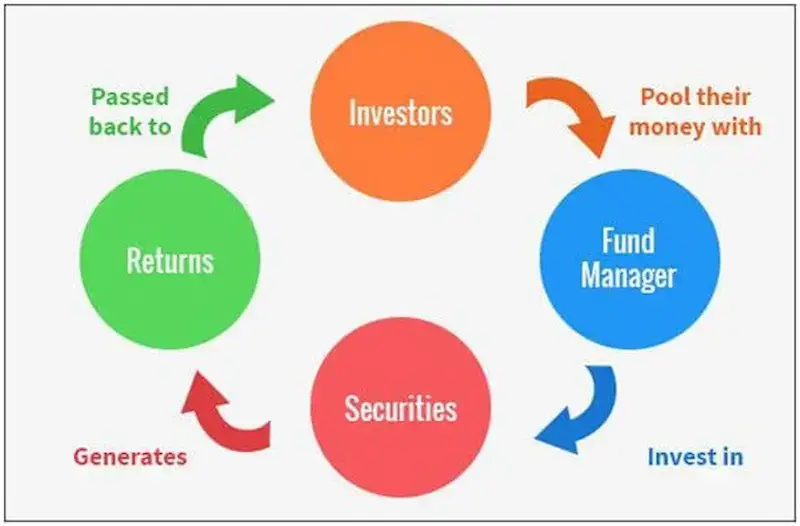
A professionally managed investment fund that pools the capital of numerous investors is called a mutual fund. This money is invested by a fund management in accordance with the goals of the fund, such as balanced investing, growth, or income.
In contrast to exchange-traded funds (ETFs), mutual funds are normally bought and sold based on their Net Asset Value (NAV) just once every trading day after the market closes.
ETF vs Mutual Fund for Beginners: Key Differences
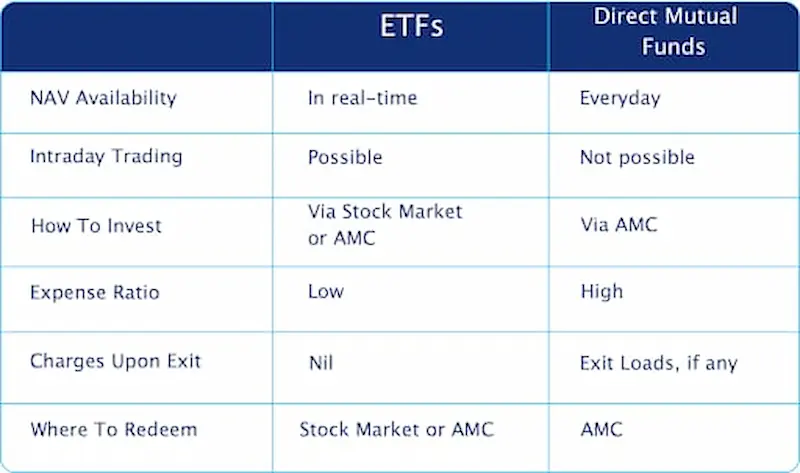
When you examine the key characteristics of ETFs and mutual funds, it becomes much simpler for beginners to understand the differences between them.
| Feature | ETF | Mutual Fund |
|---|---|---|
| Trading | Bought and sold throughout the day | Bought or redeemed at end-of-day NAV |
| Management | Mostly passive | Active or passive |
| Investment Minimum | Usually the price of one share | May require a minimum investment |
| Expense Ratio | Generally lower | Often higher for actively managed funds |
| Flexibility | High | Moderate |
| Liquidity | High | Good |
Although they both offer diversification, they function differently.
How ETFs Work
ETFs trade like common shares and are listed on stock exchanges.
A portion of the underlying portfolio is owned by investors who purchase ETF shares. The market price of the ETF fluctuates in tandem with the assets’ value.
Because ETFs trade continuously, they provide investors greater flexibility to react to movements in the market.
How Mutual Funds Work
Money from numerous investors is gathered by mutual funds and invested in a diverse portfolio.
Expert fund managers use the fund’s strategy to determine which securities to purchase or sell.
The fund sets the price investors pay or get when purchasing or redeeming units by calculating its NAV at the conclusion of each trading day.
For novices comparing ETFs and mutual funds, this distinction is crucial.
Benefits of ETFs
For a number of reasons, ETFs have grown in popularity among investors.
Lower Costs
Since many ETFs are passively managed, their expense ratios are frequently lower than those of actively managed mutual funds.
Trading Flexibility
Every time the stock market is open, investors can purchase or sell ETF shares.
Transparency
The majority of ETFs allow investors to know precisely what they own by frequently disclosing their holdings.
Tax Efficiency
Because of their structure, ETFs may be more tax-efficient than conventional mutual funds in certain nations.
Benefits of Mutual Funds
Additionally, mutual funds have a number of benefits, especially for long-term investors.
Professional Management
Expert fund managers make investment decisions and carry out market analysis.
Automatic Investing
Mutual funds are perfect for gradually increasing wealth because many of them enable recurring investment programs.
Wide Variety
To meet a variety of objectives, investors can select among equity, debt, balanced, sector, and index mutual funds.
Diversification
Mutual funds reduce company-specific risk by spreading investments over a variety of securities, just like ETFs do.
Potential Drawbacks
Neither of these investment choices is ideal.
ETF Disadvantages
- Brokerage commissions may apply, depending on your platform.
- Prices fluctuate during the day.
- Certain specialist ETFs can see less trading activity.
Mutual Fund Disadvantages
- increased costs for funds that are actively managed.
- restricted ability to trade.
- Certain funds have minimal investment requirements.
For newcomers comparing ETFs and mutual funds, it is crucial to comprehend these trade-offs.
Which Is Better for Beginners?
No one-size-fits-all solution exists.
Mutual funds can be a better choice if you’re looking for a straightforward investment that offers professional management and automated monthly contributions.
ETFs can be a good fit for your investment style if you desire more flexibility, less prices, and the option to trade during market hours.
Your financial objectives, investment horizon, and level of familiarity with handling your assets should all play a role in your decision when comparing ETFs and mutual funds for beginners.
Factors to Consider Before Investing
Before selecting one, consider the following:
- What financial objectives do I have?
- For what length of time may I continue to invest?
- How much danger am I willing to take?
- Which would I prefer: passive investing or active management?
- Do I feel at ease using a brokerage account to purchase investments?
Your responses will be used to identify the best investment vehicle.
Common Mistakes Beginners Make
When deciding between mutual funds and ETFs, novice investors frequently make preventable errors.
Among them are:
- Just concentrating on previous results
- Disregarding investment fees
- Attempting to time the market
- Investing without specific objectives
- Insufficient diversification
- Emotionally responding to transient market fluctuations
In general, a focused, long-term strategy produces greater results than pursuing quick profits.
ETF vs Mutual Fund for Beginners: Quick Comparison
| Choose ETFs If You… | Choose Mutual Funds If You… |
|---|---|
| Prefer lower fees | Prefer professional management |
| Want intraday trading | Invest regularly through SIPs or recurring plans |
| Like passive investing | Want actively managed portfolios |
| Already use a brokerage account | Prefer a simpler investing experience |
For beginners, such an easy comparison can greatly simplify the differences between mutual funds and exchange-traded funds.
Frequently Asked Questions
For beginners, are ETFs superior to mutual funds?
Not always. While mutual funds offer expert management and simple automated investing, exchange-traded funds (ETFs) frequently offer lower charges and more flexibility. Your financial objectives will determine the best option.
Is it possible to invest in both mutual funds and ETFs?
Indeed. In order to establish a diversified portfolio that strikes a balance between flexibility and expert management, many investors combine the two.
Which is less expensive?
Compared to actively managed mutual funds, passively managed ETFs often have lower expense ratios.
Compared to mutual funds, are ETFs safer?
Neither is intrinsically safer. Rather than the investment structure itself, the degree of risk is determined by the investments held within the ETF or mutual fund.
Conclusion
It doesn’t have to be difficult to decide between an ETF and a mutual fund. Both are great investment tools that can help you create long-term wealth and offer diversification. The best option will depend on your investment style, financial goals, and level of portfolio management activity.
Beginners generally find ETFs attractive than mutual funds due to their cheaper fees, tax efficiency, and trading flexibility. Conversely, those who appreciate automated investment and professional management should choose mutual funds.
Instead of focusing on which choice is better for everyone, consider which one best suits your unique financial goals. You might even choose to add both mutual funds and exchange-traded funds (ETFs) to your investment portfolio in order to take advantage of each as your expertise and knowledge increase. Knowing the differences between mutual funds and exchange-traded funds (ETFs) can provide you with a solid basis for making wise investment choices and achieving long-term financial success.