

It’s not as easy as selecting the funds with the best recent returns to find the Top 5 Mutual Funds in India (2026). Economic conditions differ, fund managers change, and markets change. One year, a fund at the top of the performance ranking might not be there the following year.
Due to long-term wealth creation goals, record SIP inflows, and growing financial awareness, Indian investors are still very interested in mutual funds in 2026. Systematic investment is still one of the best ways to accumulate wealth, even in the face of market volatility.
This article covers five popular mutual funds in several categories that have continuously drawn investors because of their long-term performance, portfolio quality, and investment philosophy. This article highlights funds that are renowned for their overall quality and suitability for various investing goals, rather than simply focusing on short-term results.
READ MORE: https://marketmantra2026.in/what-is-mcx-and-how-does-it-work/ https://x.com/BorsaGenci777/status/2074169251494056311?s=20
Why Mutual Funds Continue to Grow in India
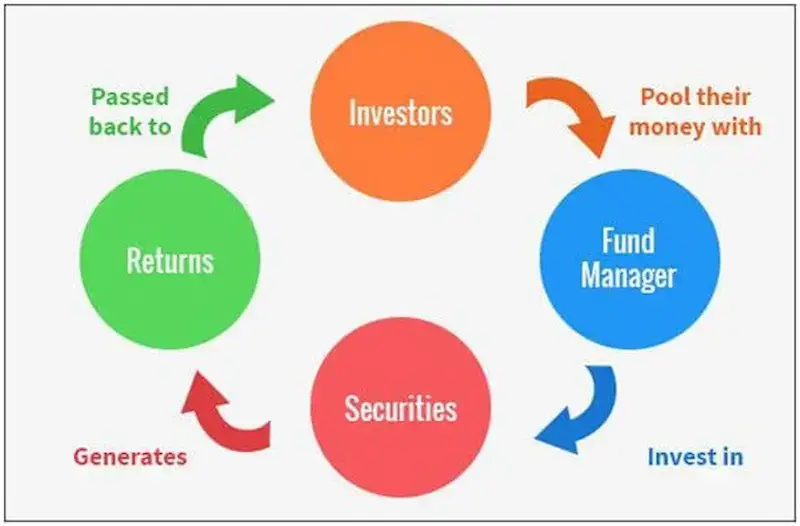
Since investors now realize that disciplined investing often results in better long-term results than trying to forecast the market, India’s mutual fund business has grown considerably over the past ten years.
Among the most important advantages are:
- Expert money management
- The process of diversification
- Minimal investment needed
- SIP flexibility
- Openness
- SEBI-regulated
How We Selected These Funds
Instead of choosing funds only based on their previous strong returns, this list takes into account:
- Consistency across time
- Quality of fund management
- Portfolio diversification
- Size of assets (AUM)
- Ratio of expenses
- Risk control
- Popularity among investors
Top 5 Mutual Funds in India (2026)
1. Parag Parikh Flexi Cap Fund
Category: Flexi Cap
One of the most famous diversified equities funds in India is still the Parag Parikh Flexi Cap Fund. It is renowned for making long-term investments in reputable companies instead of following fads in the industry. Additionally, it can invest in small-cap, mid-cap, and large-cap businesses.
Suitable For
- Long-term investors
- Beginners in SIP investing
- Creation of wealth
Pros
- knowledgeable management
- A portfolio that is diverse
- Strong track record of long-term performance
- A methodical approach to investing
2. HDFC Flexi Cap Fund
Category: Flexi Cap
One of the biggest diversified equities funds in India is still the HDFC Flexi Cap Fund. Its investment approach keeps exposure across a range of market capitalizations while focusing on well-established companies.
Best For
- Investors looking for security
- Extended SIP
- Planning for retirement
Strengths
- High AUM
- Regular investing procedure
- Holdings that are diversified
3. Nippon India Small Cap Fund
Category: Small Cap
Nippon India Small Cap Fund continues to be one of the most talked-about small-cap schemes for investors who agree to accept greater volatility in exchange for possibly higher long-term profits. Small-cap investing is typically only suitable for investors with a long investment horizon due to the increased risk involved.
Best For
- Investors who are aggressive
- Long-term generation of wealth
- Investors having a time horizon of seven to ten years
Advantages
- High potential for growth
- A small-cap portfolio that is diversified
- strong research approach
4. HDFC Mid Cap Opportunities Fund
Category: Mid Cap
Mid-cap firms usually strike a balance between potential for growth and stability. The HDFC Mid Cap Opportunities Fund is known for finding companies with long-term growth potential.
Suitable For
- Investors who are medium to aggressive
- Longer SIPs
- Portfolio diversification
5. SBI ELSS Tax Saver Fund
Category: ELSS
For many salaried people, tax-saving investments are still crucial. The SBI ELSS Tax Saver Fund maintains a diverse portfolio while combining equities investing with Section 80C tax benefits.
Best For
- Tax savings
- New investors
- Long-term financial investing
Top 5 Mutual Funds in India (2026): Comparison Table
| Mutual Fund | Category | Risk | Best For |
|---|---|---|---|
| Parag Parikh Flexi Cap | Flexi Cap | Moderate | Long-term wealth |
| HDFC Flexi Cap | Flexi Cap | Moderate | Retirement planning |
| Nippon India Small Cap | Small Cap | High | Aggressive growth |
| HDFC Mid Cap Opportunities | Mid Cap | Moderately High | Long-term SIP |
| SBI ELSS Tax Saver | ELSS | Moderate | Tax saving |
Should You Invest Through SIP or Lump Sum?
SIP continues to be the chosen choice for a large number of investors because it
- lowers the risk of market timing
- supports smart investing
- The advantages of rupee-cost averaging
- lowers the cost of investing
Investors with a significant quantity of money and a long investment horizon might benefit from lump-sum investing, but time becomes crucial.
Factors to Consider Before Investing
Never pick a mutual fund only because its recent returns have been the highest.
Instead, review:
- Investment goal
- Tolerance for risk
- Category of funds
- Ratio of expenses
- Experience as a fund manager
- Quality of the portfolio
- Consistency across history
Common Mistakes Investors Make
A lot of beginners make simple mistakes, such as:
- Following the top performance from the previous year
- Investing without specific objectives
- Disregarding danger
- Changing money frequently
- Stopping SIPs when the market is down
Patience, as opposed to frequent buying and selling, is typically the key to successful investing.
Is 2026 a Good Time to Invest?
Financial gurus often stress that long-term investing is more important than trying to pinpoint the ideal entry point, even though market conditions can change. Even in times of market volatility, consistent investing through SIPs has continued to be popular.
Top 5 Mutual Funds in India (2026): Frequently Asked Questions
In 2026, which mutual fund is the best in India?
No single mutual fund is “best” for everyone. Your financial goals, investment duration, and risk tolerance will decide the best option.
Which mutual fund is ideal for beginners?
Because they diversify investments across several industries and businesses, many beginners begin with diversified Flexi Cap or Large Cap funds.
Is SIP preferable than a lump sum?
Because it encourages disciplined investing and lessens the impact of market volatility, SIP is typically preferred by regular investors.
Are returns guaranteed by mutual funds?
No, returns are never guaranteed because mutual funds invest in securities connected to the market.
Top 5 Mutual Funds in India (2026): CONCLUSION
Finding the biggest recent return should never be the goal while choosing the Top 5 Mutual Funds in India (2026). A well-selected mutual fund enables disciplined long-term investing, fits your risk tolerance, and supports your financial objectives.
Because of their investing strategy and long-term credibility rather than just short-term performance, funds like the Parag Parikh Flexi Cap Fund, HDFC Flexi Cap Fund, Nippon India Small Cap Fund, HDFC Mid Cap Opportunities Fund, and SBI ELSS Tax Saver Fund continue to be among the most popular options.
Consistency, diversification, and patience continue to be the cornerstones of successful mutual fund investing, regardless of whether you are just starting out or growing an existing portfolio.
Pingback: What Is MCX and How Does It Work? Beginner's Guide (2026)
Pingback: How Mutual Funds Work for Beginners (2026 Complete Guide)